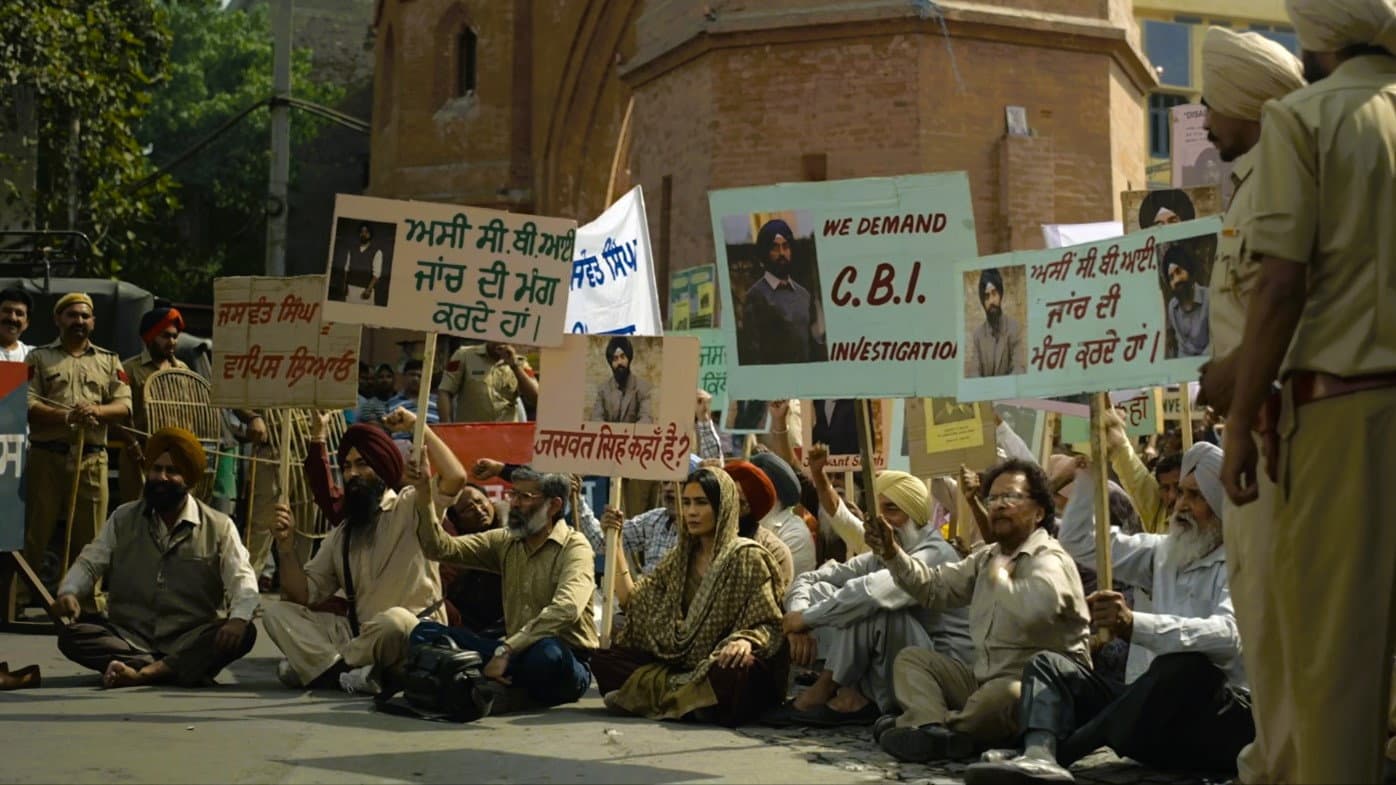


When Satluj disappeared from ZEE5 just two days after its release, few expected the film’s exhibition to continue beyond the streaming platform. Instead, its removal has given rise to an unusual grassroots movement across Punjab, where villages are organising community screenings that have drawn hundreds of people into shared public spaces.
According to The Associated Press, copies of the film began circulating locally after it was taken down from ZEE5, prompting volunteers and community groups to arrange screenings in villages across the state.
Rather than watching the film individually on personal devices, audiences have been gathering in gurdwaras, village grounds, schools and community halls. Punjab Newsline reported that youth organisations and local volunteers have been using projectors and LED screens to organise evening screenings, with announcements often made through gurdwara loudspeakers to invite residents.
The screenings have spread across districts including Amritsar, Tarn Taran, Gurdaspur, Sangrur, Patiala, Ludhiana, Barnala, Bathinda, Moga and Hoshiarpur, according to Punjab Newsline. The publication reported that many of the events have attracted intergenerational audiences, turning the screenings into discussions about one of the most contentious chapters in Punjab’s recent history.
Directed by Honey Trehan and starring Diljit Dosanjh, Satluj tells the story of human rights activist Jaswant Singh Khalra, whose investigations into alleged enforced disappearances and secret cremations during Punjab’s militancy period made him one of the state’s most significant rights campaigners. Produced under the working title Punjab ’95, the film spent years in dispute with India’s censor board before finally premiering on ZEE5 on 3 July. It was removed from the platform on 5 July following objections raised by the Union government, The Associated Press reported.
The screenings have also acquired political backing. The Print reported that the Shiromani Akali Dal has announced plans to organise screenings of the film “in every village and corner of Punjab”, framing the initiative as an effort to ensure wider public access to the film.
Responding to criticism that the film could inflame communal tensions, director Honey Trehan defended its reception in Punjab. In an interview with The Times of India, Trehan said Hindus and Sikhs had been watching the film together peacefully, rejecting claims that it was intended to create divisions.
The phenomenon is notable not only because of the controversy surrounding the film, but because it has revived a form of collective film viewing that has largely disappeared in the streaming era. What began as a digital release has evolved into a community-led exhibition circuit, with villages creating their own temporary cinemas and audiences choosing to experience the film together rather than alone.
For Indian independent cinema, the episode illustrates how exhibition can sometimes escape conventional distribution channels. Instead of ending the film’s reach, its removal from streaming appears to have transformed Satluj into a rare example of grassroots, community-driven circulation.